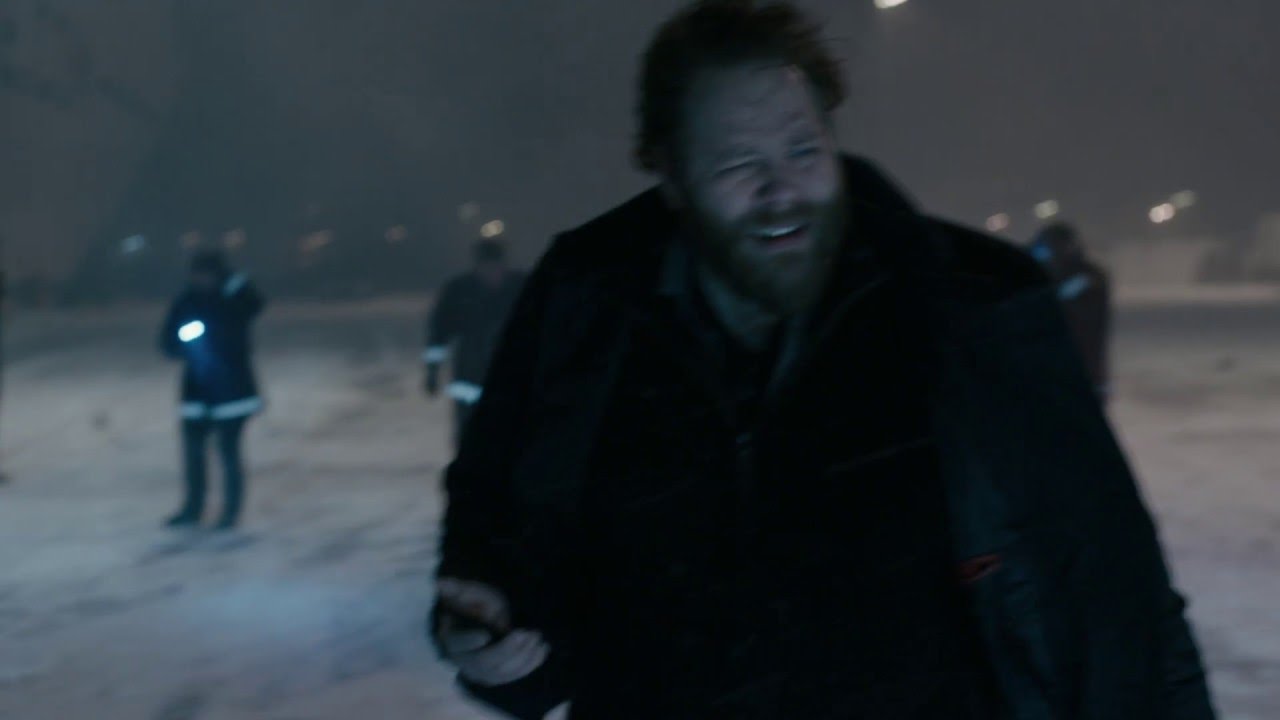
There are places that feel beautiful.
And then there are places that feel ancient.
Watching Trapped, I couldn’t help but think that Iceland belongs to the latter. The land where almost nothing grows, where black volcanic rock meets snow and the fjords cut so deeply into the coastline that they seem to have been carved by giants. It is a country that makes you feel wonderfully insignificant.
The labyrinth of mountains, frozen roads and isolated fishing communities creates the perfect setting for a crime drama. Here, there is nowhere to hide. The weather dictates every movement, every investigation and every decision. Nature is not simply a backdrop—it becomes the greatest obstacle of them all.
Trapped is exactly the kind of series that explains why Nordic Noir changed crime drama forever — the landscape is not decoration; it becomes part of the pressure.
What I love most about Trapped is its patience. It allows the silence, the cold and the landscape to tell as much of the story as the dialogue. Every wide shot reminds you how small people really are against Iceland’s overwhelming wilderness.
Watching Trapped in the middle of July almost made me turn up the heating. You can practically feel the cold coming through the screen.
It also made me think about something else. Most of us spend our lives moving towards bigger cities, searching for opportunity, convenience and connection. Yet there are people who choose to live in places like this, surrounded by mountains, snow and long winters, where isolation is simply part of everyday life. While watching Trapped, I couldn’t help wondering how differently each of us defines quality of life. For some, it is found in the energy of a city. For others, it lies in the quiet of a remote fjord, where the silence is as much a companion as the people around you.
P.S.: One thing I particularly noticed about the first season was its pace. Ten episodes. Ten long episodes. Long, perhaps, like the Icelandic winters themselves. I can’t say I loved the pace, but it was a familiar kind of torture. The sort that Nordic noir has perfected over the years.
There is no rush to reveal the truth. Every clue arrives slowly, almost like an intravenous drip, one tiny detail at a time. More than once I wondered if the story could have reached the same destination in fewer episodes.
And yet, by the time I reached the final episode, I realised the series had quietly led me in every possible direction except the right one. The identity of the killer genuinely caught me by surprise. That’s the reward for staying patient. The best crime dramas don’t simply hide the truth—they patiently teach you to look somewhere else.
WATCH THE TRAILER BELOW