
Some television characters arrive on screen and immediately invite you in.
Petra doesn’t.
She’s blunt, impatient, sarcastic and often difficult to like. She doesn’t waste time trying to make people feel comfortable, and she certainly doesn’t care whether people approve of her. At first, I wasn’t even sure I liked her.
But somewhere along the way, I realised that was exactly the point.
Petra isn’t written to be charming. She’s written to be human.
One of the first things I noticed wasn’t the crimes she was solving. It was her apartment.
There are boxes everywhere. And a spider.
Not for a few days after moving in. Not because she’s decorating. Just… boxes. As if she’s never really arrived.
That stayed with me.
I’ve moved house before, and I know that feeling of living out of boxes for a week or two. But Petra gives the impression that unpacking simply isn’t a priority because she hasn’t unpacked her life either.
She’s settled into a job.
She’s almost settled into a city.
But she hasn’t settled into herself.
Even food reflects that.
She doesn’t seem interested in creating a home. Cooking feels like another task she can’t be bothered with. At one point she gets her ex to bring takeaway instead.
It’s such a small detail, but it says so much.
A kitchen often tells you whether someone believes they’re staying. Petra’s doesn’t.
That’s one of the reasons I keep comparing her with Blanca.
Blanca’s flat isn’t big or luxurious, but it’s full of life.
She cooks.
She dances while making coffee.
She dances in the rain.
She fills her home with music, laughter and routine.
Despite being blind, she has built a place where everything belongs.
Petra can see everything.
Yet she still seems to be searching for somewhere she belongs herself.
I find that contrast fascinating.
The city of Genoa almost becomes another character in both series.
With Blanca, Genoa feels colourful, warm and alive. She experiences it through sound, smell and touch. She notices cafés, bakeries, the sea, the rain, the rhythm of the streets. She moves through the city almost like she’s dancing with it.
Petra walks through exactly the same city, but she barely seems to notice it.
She’s always walking towards the next case, the next interview, the next problem.
The beauty is there.
She just isn’t looking at it.
Maybe that’s what happens when your head is always somewhere else.
Another thing I admire about Petra is that the writers never try to soften her.
She’s stubborn.
She’s socially awkward.
She says the wrong thing.
She gets frustrated.
She can be rude.
She makes mistakes.
And yet she’s an excellent detective.
Television often feels the need to make female detectives endlessly compassionate or endlessly brilliant. Petra is neither. She’s simply very good at her job, while remaining completely imperfect as a person.
That feels refreshingly honest.
She’s also one of the few women on television over forty who isn’t presented as having everything figured out.
She’s divorced.
Relationships are complicated.
Her personal life is messy.
She still doubts herself.
She’s still changing.
And I love that.
Life doesn’t magically become neat because you reach a certain age.
Neither does Petra.
Maybe that’s why those boxes matter so much to me.
They’re not just moving boxes.
They’re emotional boxes. Every time she solved the crime, a souvenir went inside a small box too. Boxes, boxes, boxes!
They’re reminders that some people can spend years building careers while never quite building a home.
By the end of the series, I wasn’t watching Petra because I wanted her to become happier or softer.
I was watching because she felt real.
Not polished.
Not inspirational.
Not perfectly healed.
Just a woman trying to make sense of her life while solving everyone else’s.
Sometimes that’s the most believable character of all.
WATCH THE TRAILER BELOW
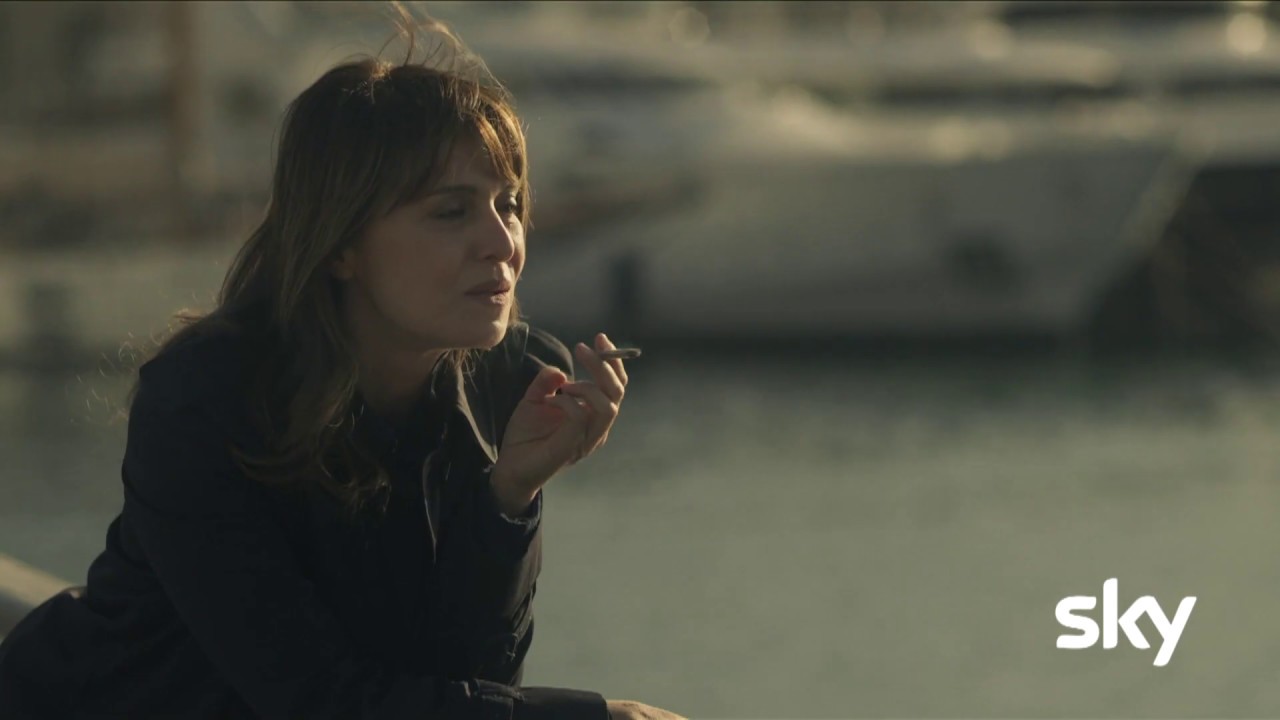
The Italian noir crime drama series Petra (starring Paola Cortellesi as Inspector Petra Delicato) is fully available to stream for free in the UK on ITVX.