
I don’t think I loved Blanca only because of the cases.
Yes, the crime stories matter. Yes, Genoa look exciting and difficult. Yes, there is tension, romance, hand gestures, humour, food, secrets, and all the usual ingredients that make an Italian detective series addictive.
But Blanca herself is the reason the series stayed with me.
Because she is not written like an American hero.
She is not there so everyone can feel sorry for her. She sets the tone within the first 5 minutes of the series. She cuts right through and declares herself as just another girl coming to work everyday. She is not there for the side looks and the ”awww look how brave she is ”way. She claims her space. She allows herself to be confident, clever, difficult, funny, stubborn, fashionable, messy, irritating, warm and completely in charge of herself. Her father made sure of all these ever since her accident.
And that matters.
She is blind, but the story does not trap her in darkness
Blanca’s blindness is central to who she is, but it is not the only thing about her.
That is where the series gets something right. It does not pretend her disability does not exist. Nor does it make her magically unaffected by it either. We see how she moves through the world differently. She depends on visual aid from her best friend. We see how she listens, how she reads people, how she builds maps in her mind, how she uses sound, memory, instinct and intelligence.
But we also see her live.
She works, she cooks, she dresses beautifully. She argues and she can definitely flirt. She claims her space in life.
She is taken seriously at work — and that is important
One of the strongest parts of Blanca is watching her enter a workplace where people underestimate her, and then watching that slowly change.
At first, there is suspicion. Of course there is. A blind woman in a police environment is not what people expect. Some people look at her and see risk before they see skill. They see limitation before they see intelligence.
But Blanca proves herself without begging for approval.
She is not asking to be included as a favour. She is there because she is good. Her mind works sharply. She hears what other people miss. She notices tone, rhythm, hesitation, fear. She understands that truth is not always in what people say, but in how they say it.
That is what makes her valuable.
And I like that the series allows her to be respected professionally. Not in a sentimental way. In a real way. She becomes part of the work because she contributes to the work.
That representation matters.
Not because every disabled person has to be exceptional to deserve respect. They don’t. But because it is still powerful to see a disabled woman in a serious job, holding her own, being trusted, being challenged, and being treated as someone with authority.
The wardrobe is not just pretty clothes
When the first episode begun, I thoyght to myself ” she is young, modern, probably a fashionista”. The colours were impossible to ignore. Blanca’s wardrobe is one of the most interesting things about her character.
She wears bold coats, and mini dresses, her clothing is shaped to her figure. There is yellows and pinks and blues and greens and reds. No patterns. Clear informations. Just like the life she needs to lead. She does not see them but the clothes do the seeing for her.
And I wonder if production did this on purpose to show her youth and spirit or they just needed to make a statement about the character.
Blanca lives without light but the world that surrounds her-except her office in the police station- is not visually dull. If anything, it feels like production tried to keep the character surrounded with colour and love and life. Her house, the furniture, the frames on the wall. Everything is there to say: I am here. I am real. I am visible. I am not hiding. I refuse pity.
She is independent, but not unrealistically perfect
What I also like is the Blanca’s independence does not feel fake. She is capable, yes but she struggles. She bumps into people, furniture, walls, breaks down when she loses her stick or Linneo (Somehow I keep forgetting Cane Tre). She depends on Stella for her every day life. She even hired her mum to help her around the chores, even if she didn’t know who she was at the beggining.
She has moments of anger, fear, frustration and vulnerability. Independence does not mean never needing anyone. It means having agency. It means making choices. It means having the opportunity and the right to live a life without society treating you like a fragile object.
Why she stays with me
Blanca stays with me because she changes the usual detective story.
Normally, detective dramas are obsessed with what can be seen. Clues, faces, bodies, rooms, evidence, photographs, CCTV, blood, landscapes. The detective looks, notices, observes.
Blanca changes that.
She reminds us that perception is bigger than sight.
She listens. She senses. She understands atmosphere. She picks up on what people try to hide. In a way, her blindness exposes how lazy everyone else can be. They think seeing is knowing. Blanca knows it is not.
And that is what makes her different.
Not weaker.
Different.
WATCH THE TRAILER FOR SEASON 3 BELOW
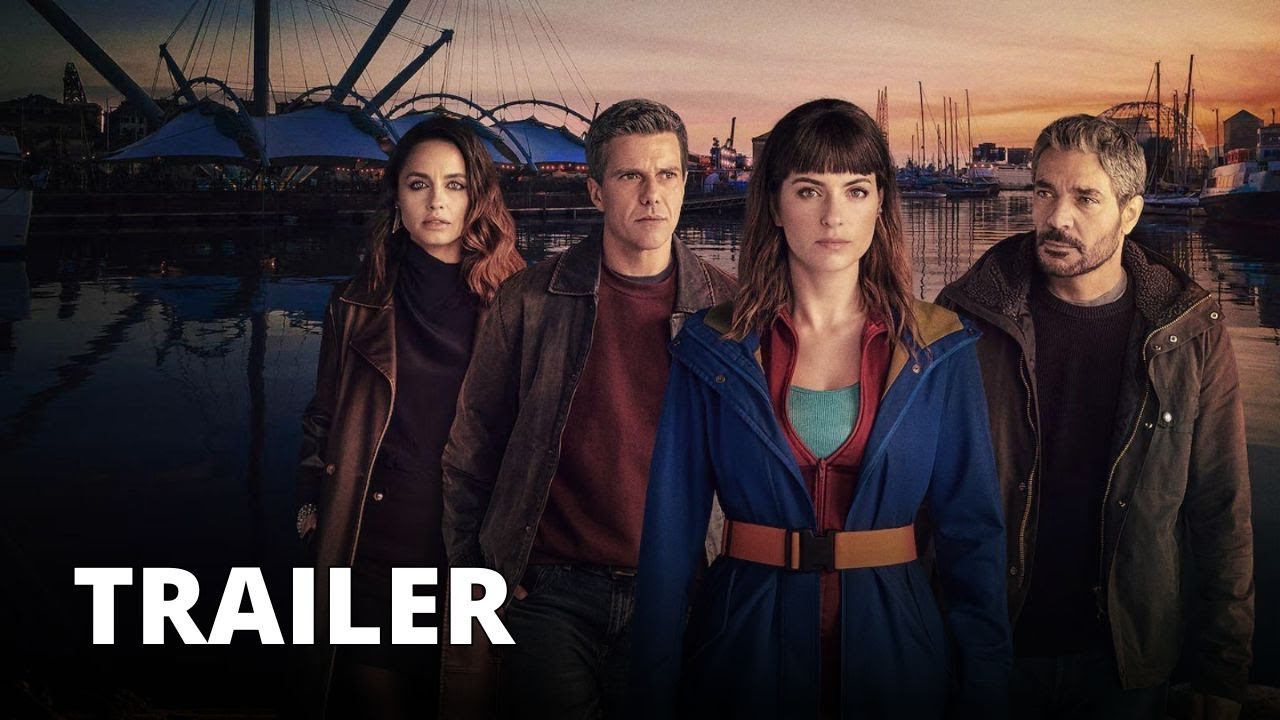
You can watch the Italian crime drama series Blanca in the UK for free on Channel 4 via the Walter Presents Collection.