There are crime dramas that rely on speed, and then there are those that invite you to stay for a while.
Three Pines belongs firmly in the second category.
The fictional village feels almost idyllic. Independent bookshops, cafés, friendly neighbours and breathtaking Canadian scenery create the impression of a place where nothing bad could possibly happen.
Which, of course, is exactly why it does.
As each investigation unfolds, the peaceful façade begins to crack, revealing old wounds, hidden relationships and long-buried secrets. Rather than rushing from one twist to another, the series allows its characters to grow, making every mystery feel rooted in the community itself.
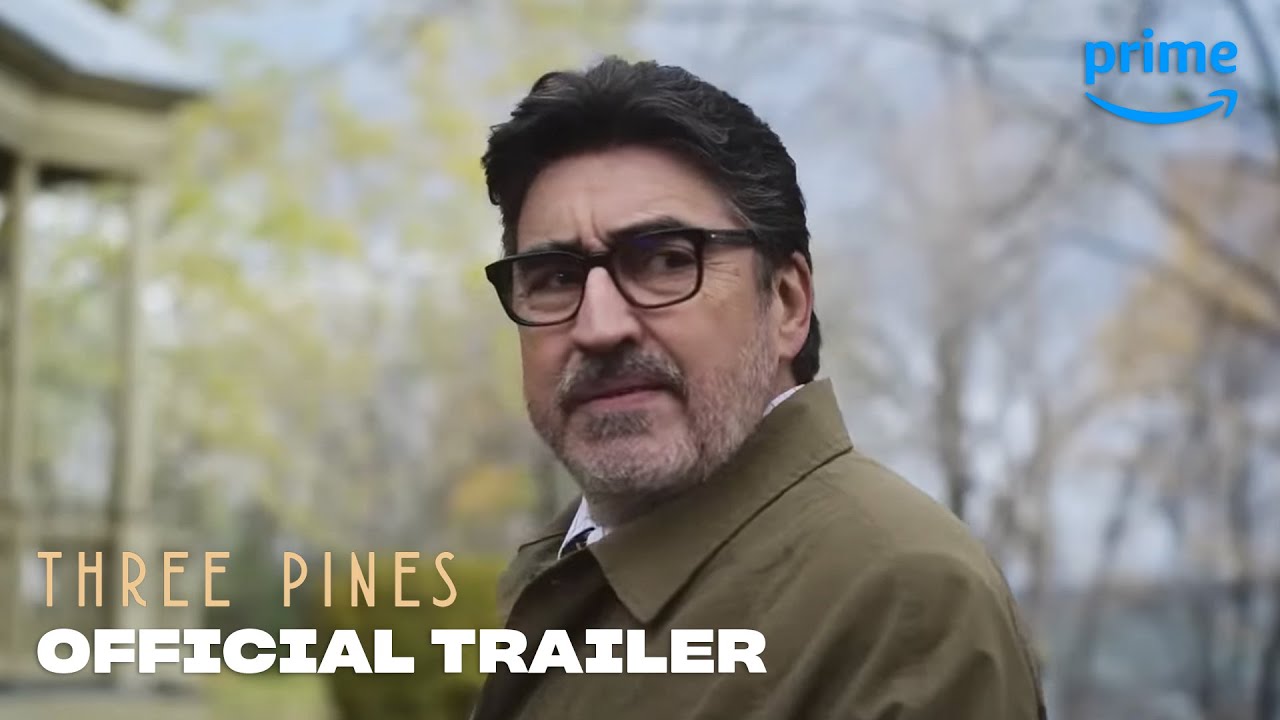
Alfred Molina brings warmth and quiet intelligence to Chief Inspector Armand Gamache. He solves crimes with empathy as much as observation, reminding us that understanding people can be just as important as collecting evidence.
Like so many of my favourite crime dramas, Three Pines proves that the smallest places often hide the biggest stories.
Although the village of Three Pines is fictional, much of the series was filmed in and around the Eastern Townships of Québec, one of Canada’s most picturesque regions. Small villages, white church steeples, country roads, forests and rolling hills create the impression of a place untouched by time. It is the kind of landscape that invites you to slow down, breathe and believe that nothing bad could ever happen there—which, of course, is exactly why the mysteries feel so unsettling. Once again, television reminded me that some of the most memorable crime stories don’t belong in great capitals, but in the quiet villages where everyone knows everyone… or at least thinks they do.
A Personal Note on Alfred Molina
My earliest memory of Alfred Molina is from Not Without My Daughter. I was quite young when I watched it, and his portrayal of a violent, controlling husband affected me deeply. I hated him immediately.
At that age, I couldn’t yet separate the actor from the character. His face became connected to fear and cruelty in my mind. Willem Dafoe had a similar effect on me for years; whenever he appeared, I was convinced that harm would follow.
It took me almost two decades to see a different face in Alfred Molina. That changed with Chocolat. Slowly, the actor emerged from behind the characters I had attached to him, and I began to understand the extraordinary skill required to make an audience feel so strongly.
Watching him now in Three Pines, I feel tenderness towards my younger self and her vulnerable soul. I also love that maturity has taught me to distinguish the face from the character and the performance from the person.
Perhaps that is another quiet pleasure of growing older: returning to the actors who once frightened us and finally seeing the full range of what they can do.
WATCH THE TRAILER BELOW