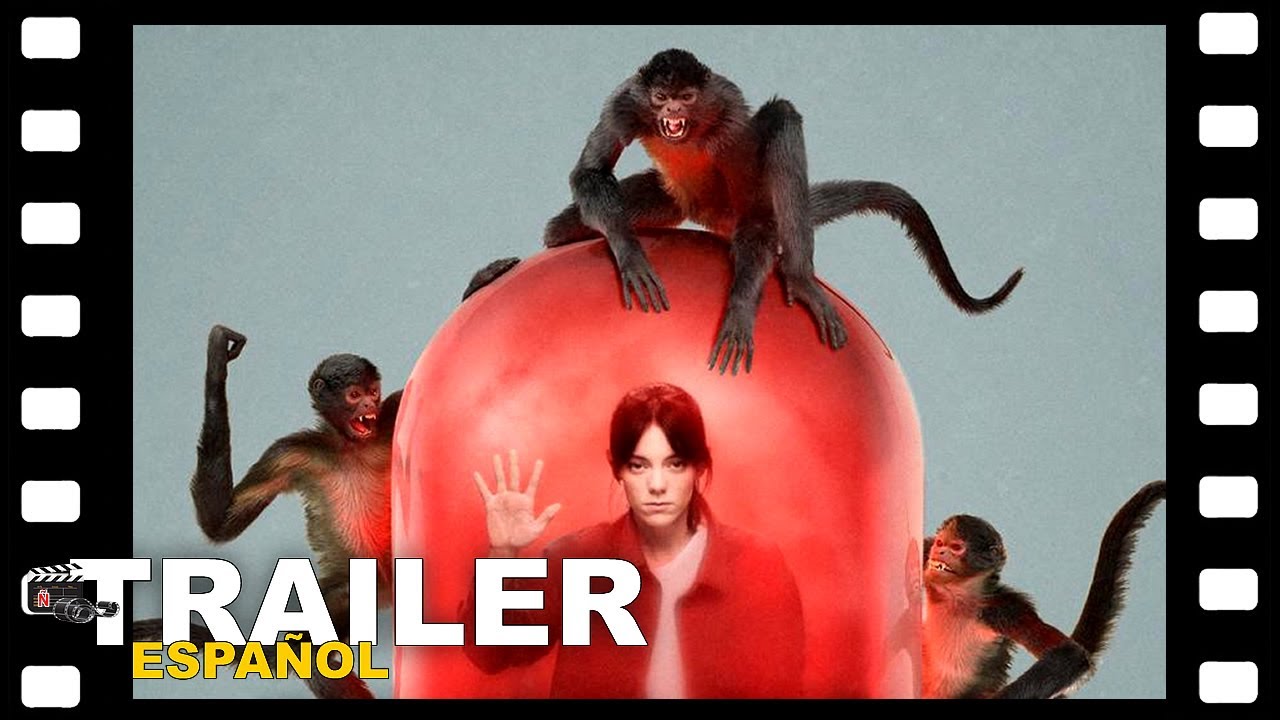
There are television detectives who enter a room and immediately take control of it. Antonia Scott is not quite like that.
Sometimes it feels as though the room has to rearrange itself around her.
Reina Roja gives us another extraordinary female mind at the centre of European crime drama, but what interested me was not simply the idea that Antonia is exceptionally intelligent. We have seen brilliant investigators before. What makes her compelling is the uncomfortable relationship she has with that intelligence: the speed of her thoughts, the pressure it puts on her, the distance it can create between her and everyone else.
And then there is Jon Gutiérrez, who walks into that world and somehow makes the whole thing work.
Not because he understands Antonia immediately.
Because he doesn’t.
Antonia Is More Interesting Than Her IQ
It would have been very easy to turn Antonia Scott into another television “genius”.
Give her an impossible IQ. Let her see something nobody else sees. Have everybody stare at her in amazement. Repeat.
But Antonia’s intelligence does not feel like a convenient superpower. It can be useful, frightening, exhausting and destructive, sometimes almost simultaneously.
That distinction matters.
Being able to process more does not necessarily mean being able to live more easily. Antonia may see connections other people miss, but that does not mean she has some magical understanding of every human being around her.
And I think this is where Reina Roja joins an interesting movement that European television has been building quietly for years.
Europe Has Been Making Space for Unconventional Women
Antonia does not exist in isolation.
Long before her, The Bridge gave us Saga Norén, one of the most memorable investigators European crime television has produced. France gave us Astrid Nielsen in Astrid et Raphaëlle. Then came the completely different energy of Morgane Alvaro in HPI.
These women are not the same, and I think that point is important.
Not every highly intelligent woman is autistic. Not every neurodivergent woman behaves in the same way. Not every unconventional female investigator needs to be quiet, emotionally distant or socially awkward.
Saga, Astrid, Morgane and Antonia are radically different personalities.
That is precisely what makes their collective presence interesting.
European television has not simply replaced one stereotype of the female detective with another. Slowly, it has begun allowing women to occupy a much wider range of intellectual and behavioural spaces.
They can be brilliant and difficult. They can need support. They can misunderstand people. They can overwhelm people. They can be overwhelmed themselves.
And none of those things automatically disqualifies them from standing at the centre of the story.
We Do Not Need to Diagnose Antonia
I also don’t think we need to diagnose every character who behaves differently.
Antonia’s extraordinary intelligence and the way she processes the world may invite comparisons with neurodivergent characters we have already encountered, but high IQ and autism are not the same thing.
Sometimes television is most interesting when it gives us a character without immediately placing every aspect of them into a labelled box.
What matters to me here is the wider change.
For decades, brilliant male detectives were permitted to be obsessive, arrogant, antisocial, eccentric and almost impossible to live with. Those qualities frequently became part of their appeal.
Women were given considerably less room.
A woman could be intelligent, certainly, but preferably while remaining socially competent, emotionally available and sufficiently likeable.
Characters such as Antonia quietly disrupt that expectation.
She does not have to make her mind smaller so that everyone else can feel more comfortable around it.
Jon Is Not There to Fix Her
And this is why Jon matters so much.
The pairing could easily have fallen into the familiar pattern of the socially competent man translating the brilliant but difficult woman for the rest of the world.
Their relationship is more interesting than that.
Jon brings instincts and abilities Antonia does not have. Antonia sees things he cannot see. Neither one becomes redundant simply because the other possesses a particular strength. They have to find a way of working in the space between them.
That is something European crime drama has done particularly well with unconventional investigators.
Raphaëlle does not need to become Astrid. Astrid does not need to become Raphaëlle.
The partners around Saga gradually have to understand the way Saga communicates rather than expecting all adaptation to come from her.
The interesting question stops being which one of these people is normal?
It becomes: what can these two people understand together that neither could understand alone?
That is much better television.
And Please, Watch This One in Spanish
There are series where I strongly prefer the original language.
And then there are series where I think the original language is almost essential.
Reina Roja belongs to the second group.
Spanish carries emotion differently. Original voices matter.
There is something incredibly physical about the language when these characters become angry, frightened or frustrated. And particularly when the swearing begins.
You need to hear it.
Spanish swearing has a force in the voice that a subtitle can translate literally but can never completely reproduce. The words may appear neatly at the bottom of the screen, but what matters is the way they are thrown out: the speed, the rhythm, the irritation, the sudden increase in volume, the breath behind them.
Sometimes the swear word is anger. Sometimes it is fear. Sometimes it is frustration.
And sometimes it sounds almost like pain escaping before the character has found another way to express it.
That is part of the performance.
A dubbed voice can give you the meaning of the sentence. It cannot give you precisely the same emotional weight that the actor put into those Spanish words at that moment.
And in Reina Roja, where characters can move so quickly between control and complete emotional exhaustion, I would not want to lose that.
Swearing Can Tell Us More Than Polite Dialogue
We often treat swearing in television as something almost decorative.
It isn’t always.
People swear differently depending on where they come from, who they are talking to and what has just happened to them.
There is cultural information in it. There is class. There is intimacy. There is hostility.
There are expressions you use with a friend that would mean something entirely different if thrown at a stranger.
And there are moments when the exact words matter far less than the sound of somebody finally losing patience.
Spanish is particularly wonderful for this because emotion can arrive with such force.
You don’t necessarily need to understand every word before reading the subtitle.
You already know that somebody has had enough.
That is why original-language viewing is not simply some purist preference for me. The actor’s voice is part of the character.
Remove it and you remove something from the performance.
Madrid Should Sound Like Madrid
This connects with something I keep returning to with Mapped in Drama.
Place is not only visual.
We recognise countries through streets, architecture, landscapes and light, but we also recognise them through voices.
Madrid should sound Spanish.
Paris should sound French.
Genoa should sound Italian.
A Polish town should not lose its Polishness the moment its characters open their mouths.
If I am going to travel through television, I want the entire place.
Not just the photograph.
Reina Roja is particularly good evidence of why this matters because its characters are so verbally alive. Arguments are not clean exchanges of information. People interrupt, explode, swear, mutter and push against one another.
That sound belongs to the world of the series just as much as the streets outside.
Intelligence Without Emotional Invincibility
Another thing I appreciate about Antonia is that extraordinary intelligence does not protect her from being human.
Television has sometimes confused intelligence with emotional superiority, as though a brilliant person should be capable of calmly analysing their own life with the same precision they bring to a case.
But humans do not work like that.
You can understand incredibly complicated patterns and remain completely lost inside your own grief.
You can read a crime scene more clearly than everyone around you and still misunderstand someone you love.
You can be the smartest person in the room and still need somebody else.
That makes Antonia much more interesting than a character who simply produces the correct answer faster than everyone else.
Difference Has Quietly Become Central
When I look across European crime television now, I realise how many characters have gradually prepared audiences for someone like Antonia.
Saga did not behave the way television traditionally expected a female detective to behave.
Astrid made autism explicit and placed an autistic woman at the heart of an investigative partnership.
Morgane showed us that exceptional intelligence could be loud, chaotic, colourful and almost impossible to contain.
And Antonia brings another variation.
No announcement was needed.
No one declared that European crime drama was beginning a revolution in how intelligent and neurodivergent women were represented.
The characters simply arrived.
One country after another.
One series after another.
And eventually what once looked unusual began to look like another perfectly legitimate way to build a lead character.
That may be the most successful form of representation there is.
Let Her Be Difficult
I particularly like that these characters are not required to become inspirational.
Difference does not need to be charming every minute.
Antonia can frustrate people.
Saga could frustrate people.
Morgane can probably frustrate an entire police station before breakfast.
Astrid has needs that the people around her have to learn to respect.
That is much more believable than presenting difference only when it produces something extraordinary.
Celebrating difference should also mean allowing someone to be inconvenient. To require accommodation. To communicate differently. To get things wrong.
To be brilliant one moment and completely lost the next.
In other words, to be a full character rather than a representation exercise.
Reina Roja Adds Another Voice
And perhaps “voice” is the right word for this particular series.
Antonia adds another voice to the growing collection of unconventional women leading European crime dramas.
But Spain adds a voice too.
The language, the temperament, the arguments, the humour and those wonderfully forceful moments when frustration comes exploding out in Spanish are inseparable from the experience of watching it.
So watch Reina Roja in Spanish.
Read the subtitles.
Listen to the arguments.
Listen to the swearing.
Listen to what happens to someone’s voice when intelligence is no longer enough to keep emotion under control.
Because Antonia Scott is not interesting simply because her mind works faster than everyone else’s.
She is interesting because underneath that extraordinary mind is a human being trying to carry it.
And sometimes you need to hear her, not just understand the words.
WATCH THE TRAILER BELOW