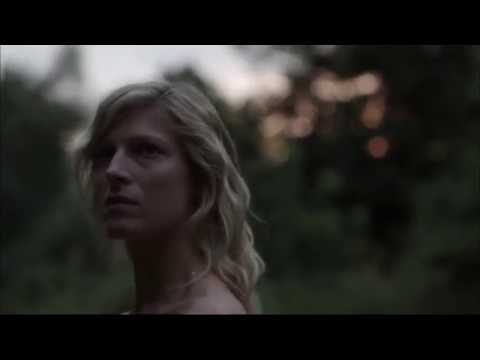
Some crime series use the forest as decoration.
La Forêt does something better. It makes the forest feel like a witness.
From the very beginning, the series understands that a forest is never just a pretty background. It can be beautiful, yes. Green, deep, quiet, almost peaceful. But it can also be the place where things disappear. A place where voices do not travel far enough. A place where the trees stand there, saying nothing, while everyone else pretends they do not know what happened.
That is what gives La Forêt its grip.
The story begins with the disappearance of a teenage girl, Jennifer Lenoir, from a village near the Ardennes Forest. It is a familiar crime-drama starting point: a missing girl, a worried community, a police investigation, secrets coming out one by one. But the series does not feel ordinary, because the place changes everything.
This is not Paris. This is not the polished France of monuments, wide boulevards and beautiful apartments with perfect windows. This is another France. A quieter France. A France of villages, damp roads, school corridors, local gossip, closed doors, old houses, and forests that seem to press against the lives of the people living beside them.
And that is exactly why it works.
The writers are clever enough to understand that small places can be more frightening than big cities. In a city, people disappear because nobody notices. In a village, people disappear even though everybody notices. That is much more disturbing.
Everyone knows the missing girl. Everyone has seen something. Everyone has an opinion. And yet the truth still manages to hide.
There is something very powerful about that. In a small community, privacy does not really exist, but secrecy does. People know who drinks too much, who argues, who cheats, who is strange, who is lonely, who does not fit. But knowing is not the same as telling. A village can be full of eyes and still be completely blind when it wants to be.
That is the atmosphere La Forêt captures so well.
The Ardennes setting gives the series a heavy, enclosed feeling. The forest is not romantic here. It is not the kind of place where you go for a nice walk and come back refreshed. It feels ancient, thick, and slightly hostile. Even in daylight, there is something uncomfortable about it. Too many branches. Too many paths. Too many places where someone could stand and watch you.
The title is perfect because the forest is not only where the crime begins. It is where the whole emotional life of the series seems to live.
The people are surrounded by it, but they are also shaped by it. The forest holds childhood memories, trauma, rumours, fear, and the kind of silence that gets passed from one generation to another. It is beautiful nature, but not harmless nature. It has roots in everything.
I liked that La Forêt does not try to make its village charming in the easy way. It is not there to sell us a postcard. The houses, the roads, the school, the police station, the woods — they feel ordinary. And because they feel ordinary, the darkness feels more believable.
Crime in a glamorous city can sometimes feel theatrical. Crime in a small village feels personal.
There is no distance. The victim is someone’s daughter, someone’s student, someone’s friend, someone’s secret. The investigation does not just disturb the present. It opens the past. And in a place like this, the past is never very far away. It sits at the kitchen table. It walks through the school corridor. It lives next door.
Samuel Labarthe brings a calm seriousness as Captain Gaspard Decker, the investigator arriving from outside. He has that useful outsider position: he can look at the village without being trapped by its habits. He does not owe anyone silence. He does not share their old loyalties. That makes him dangerous to them.
But the heart of the local tension comes through Virginie Musso, played by Suzanne Clément. She belongs to the place. She knows the people, the families, the emotional shortcuts. That makes her valuable, but it also makes everything harder. In a small village, an investigation is never just professional. It becomes personal very quickly.
Then there is Eve Mendel, played by Alexia Barlier, and she gives the series its more mysterious, wounded layer. She feels connected to the forest in a way that is not simple. She is not just a concerned teacher. She carries something. You feel that before everything is explained. Her presence adds another kind of unease — not loud, not dramatic, but slightly off-centre, like someone who has never fully stepped out of the woods.
What I appreciate about La Forêt is that it uses all these women and girls without turning the story into simple victimhood. The missing girl matters, but so do the women left moving through the fear, the suspicion, the memories and the judgement. There is a strong sense that the village has rules for how people should behave, especially girls and women, and the forest becomes the place where those rules break down.
The series also understands something important about teenagers. Adults often think they know what is happening because they live in the same house, teach in the same school, or see the same faces every day. But teenagers have their own world running underneath the adult one. Their own loyalties, cruelties, risks, performances, and secrets.
In La Forêt, the teenage world is not separate from the adult world. It mirrors it. The lies of the young echo the lies of the grown-ups. The difference is that the young are often punished faster.
And visually, the whole thing has that muted, cold feeling I like in European crime dramas. Nothing is too bright. Nothing is too polished. The beauty is there, but it is not softened. Roads look wet. Rooms feel lived in. The forest looks like it has been there long before the characters and will still be there after all of them are gone.
That gives the series a strange sadness.
Because in the end, La Forêt is not only asking who committed the crime. It is asking what kind of place allows a crime to stay hidden. What kind of community protects itself before it protects the truth. What kind of silence becomes normal because people are too tired, too ashamed, or too frightened to break it.
That is why the setting matters so much.
The Ardennes are not just a location. They are the mood of the whole story. The trees, the village, the roads, the school, the houses — everything feels connected. The crime does not land from nowhere. It grows out of the place.
And this is where La Forêt fits so well into the kind of television I love: dramas that remind you a country is not only its capital. France is not only Paris. It is also forests, borders, villages, rivers, old wounds, and small communities where beauty and darkness can live side by side.
La Forêt is quiet, tense, and deeply atmospheric. It does not shout for attention. It pulls you in slowly, like a path through the trees.
And once you are inside, you understand the danger.
The forest has been watching all along.
WATCH THE TRAILER BELOW